
Leadership & Workplace Wellness Training for Teams Under Real Pressure
When good leaders are running on empty, communication gets shorter, problems get ignored, and your best people start quietly looking elsewhere. This training helps managers and leadership teams recognize those patterns early and build healthier ways to lead under pressure.

When Burnout, Turnover, and Silence Start Running the Culture
Literally, what walks the halls isn't just what's said, it's what's not said. What happens in the unseen spaces and empty seats is shaping the culture more than any strategy deck. When burnout becomes the norm, when the best people quietly check out, and when leadership starts hearing less truth, everything starts to break down.
Burnout Is a Symptom
Your people aren't disengaged out of nowhere. They're exhausted from carrying more than they should.
Turnover Is a Signal
High turnover doesn't just hurt your team, it shows that something deeper is off in the culture.
Silence Is the Biggest Risk
When people stop speaking up, ideas stop flowing, problems hide deeper, and trust starts to fade.
Real leadership creates the kind of culture where people feel safe, supported, and seen: where they don't just survive, they thrive and stay.

WHO THIS IS FOR
Built for Leaders Who Are Already Carrying a Lot

What This Training Helps Your Organization Do
Most organizations don't have a wellness problem. They have a leadership capacity problem that shows up as a wellness problem. When leaders don't have tools for managing their own stress, they can't accurately read what's happening in their teams. When managers avoid difficult conversations, small problems compound into ones that are much harder to unwind. And when culture sends the signal that struggling is a weakness, people hide what's happening until it becomes a crisis.
This training doesn't address those problems through awareness campaigns or generic wellness programming. It addresses them by giving your leadership the specific skills they're missing: how to recognize burnout in themselves and others before it becomes visible in turnover, how to approach the conversations they've been avoiding, and how to build a culture where people don't have to choose between honesty and self-protection.
Stronger Leadership Capacity
Equip leaders with the skills to manage stress, navigate tough conversations, and lead with clarity and confidence.
Healthier, More Engaged Teams
Address issues early, build trust, and create an environment where people feel supported and empowered to speak up.
Reduced Turnover & Burnout
Recognize burnout early, address root causes, and create a culture where people want to stay and grow.
A Culture of Trust & Honesty
Build a workplace where people don't have to choose between honesty and self-protection.
Four programs, one purpose
Each program addresses a specific leadership or culture challenge, not a generic topic list.
Leading Through Burnout
Recognizing high-functioning burnout in yourself and your team before it costs you people.
Difficult Conversations & Conflict
Practical frameworks for having the conversations managers avoid, and why they avoid them.
Trauma-Informed Leadership
Understanding how trauma shows up in team behavior, and how trauma-aware leadership changes outcomes.
Organizational Mental Health Foundations
Building a workplace where mental health is addressed openly, not avoided until someone leaves.
More Training We Cover
Leadership & Self-Awareness
Team & Culture
Individual Wellness
CUSTOM TRAINING
Every Session Starts With Your Organization
Every organization that lands on this page is dealing with some version of the same problem, but rarely the exact same version. That's why the first conversation isn't about picking a package. It's about what's actually happening on your team, what's already been tried, and what you want people to be able to do differently by the end of the session. Reach out and we'll talk through timing, format, and group size together.
Request Training InfoShe's Not Describing a Problem She Read About. She's DescribingOne She's Managed
Jamie James is a Licensed Professional Counselor and the founder of two active organizations: Open Arms Initiative and Open Arms Foster Care. Foster care is one of the more demanding environments in the child welfare system, where the stakes are high, resources are stretched, and staff burnout is a genuine operational risk. She manages that reality every day while also running a separate counseling and training organization.
That's the perspective she brings into this training: a clinician's understanding of how burnout and stress actually show up in behavior, paired with a leader's understanding of what it actually takes to hold a team together under sustained pressure. When she talks about a manager who's avoiding a conversation, or a leadership team that's stopped functioning well together, she's not illustrating a concept. She's describing a pattern she's navigated firsthand.
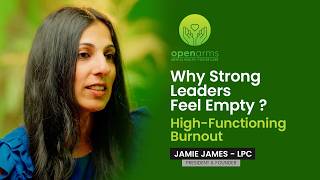
Why Strong Leaders Feel Empty?
High-Functioning Burnout Explained
.png)
Clinician. Leader. Advocate.
Real-world experience that shapes real change.
TRAINING & SPEAKING FORMATS
Format Is Matched to What Works for Your Team
Every organization's situation is different, and session format is matched to what actually works for your team. Reach out and we'll figure out the right length, setting, and structure together.
Why Organizations Choose Open Arms Initiative
Training grounded in clinical practice and real organizational leadership.
Led by a Licensed Clinician
A licensed professional counselor with clinical training in how stress and trauma actually affect behavior, not just leadership theory.
Built for Your Specific Situation
Sessions are shaped around what's actually happening in your organization, not a fixed curriculum delivered the same way to every room.
Organizational Leadership Experience
Jamie runs two organizations, so she understands the constraints, dynamics, and pressures leaders are managing when she walks into a room.
Practical Tools, Not Just Concepts
Leaders leave with specific frameworks they can use, not just a better understanding of why the problem exists.
FAQ
Frequently Asked Questions
Can't find your answer here? Reach out directly and we'll respond to whatever's on your mind.
Ask a QuestionYes. Sessions are built around your team's specific situation rather than a fixed curriculum. The first conversation is always about what's actually happening on your team, what's already been tried, and what you want people to be able to do differently.
Tell Us About Your Team
Whatever is happening in your organization right now, the first step is just telling us about it.