
Every family deserves the opportunity to heal. But for many families, accessing consistent mental health support becomes difficult when financial circumstances change, insurance coverage ends, or professional counseling becomes too expensive.
For families navigating foster care, childhood trauma, emotional challenges, and difficult transitions, these barriers can interrupt progress at a time when continued support matters most.
At Open Arms Initiative, we believe that access to healing should not depend solely on a family's financial situation.
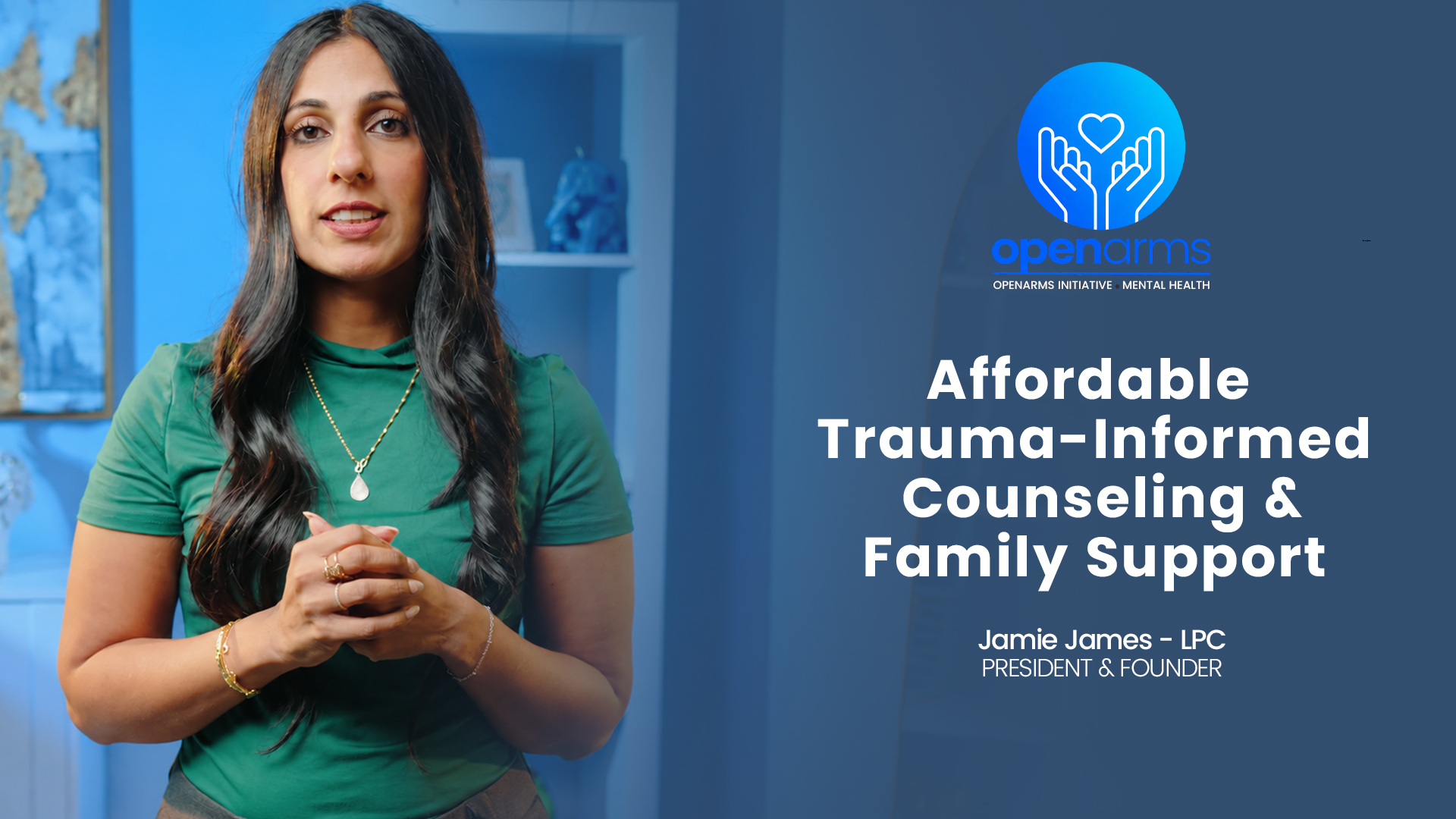
In a heartfelt YouTube video, our mission comes to life through a powerful discussion about affordable counseling, the importance of supporting foster families, and the need to create trauma-informed communities where every child feels accepted.
Healing should not stop when financial support runs out, and children should never be excluded because of the trauma they have experienced.
Why Continued Counseling Matters for Families Experiencing Trauma
Trauma recovery is rarely a straightforward process. Children and families may experience emotional, behavioral, and relational challenges that require ongoing attention and support.
For foster families, the initial assessment period can help identify a child's needs, but it is only one part of the healing journey.
Children who have experienced trauma may struggle with emotional regulation, attachment, anxiety, trust, or feelings of insecurity.
Caregivers may also need guidance in understanding behaviors, building healthy relationships, and creating predictable home environments.
Consistent counseling can help families develop coping strategies, strengthen communication, and navigate difficult experiences.
However, therapy is not always financially accessible.
Insurance coverage may lapse.
Household expenses may increase.
Families may encounter unexpected financial difficulties that make continued treatment challenging.
When counseling is interrupted, families can lose access to an important source of stability.
That's why improving access to affordable trauma-informed counseling is essential to supporting long-term family well-being.
Breaking Financial Barriers Through Affordable Counseling
One of the greatest obstacles to mental health care is affordability.
Families may recognize the need for professional support but struggle to pay for regular appointments.
Open Arms Initiative works to reduce these barriers through counseling opportunities designed for individuals and families experiencing financial hardship.
As explained in the YouTube video, the organization has developed a program where trained counseling interns provide services under professional supervision at little or no cost to eligible clients.
This approach serves two important purposes.
First, it creates additional opportunities for families to receive counseling when financial or insurance-related challenges make traditional services difficult to access.
For clients whose needs require fully licensed therapists, donor support can also help offset the cost of professional counseling.
These programs reflect a fundamental belief: Financial hardship should not automatically prevent someone from receiving compassionate mental health care.
Availability, eligibility, and appropriate provider placement depend on individual circumstances and program capacity.
How Donations Help Families Continue Their Healing Journey
Accessible counseling requires more than compassionate professionals. It also requires funding, supervision, training, and resources.
Community contributions help Open Arms Initiative maintain programs that support families who might otherwise struggle to afford therapy.
As described in the video, donations help fund the supervision and professional development of counseling interns while also offsetting the cost of services provided by licensed therapists.
This support helps expand counseling opportunities and contributes to hundreds of hours of therapy for families facing financial barriers each year, according to the video's account.
For a parent, this may mean having continued access to guidance while navigating a child's emotional challenges.
For a child, it may mean having a consistent, supportive environment to process difficult experiences.
For an entire family, continued counseling can provide opportunities to strengthen communication, build trust, and develop healthier relationships.
Every contribution helps sustain the resources and professional care that make these opportunities possible.
Watch the Video: Why Every Family Deserves Access to Healing
The YouTube video behind this article shares the heart of Open Arms Initiative's mission.
It explains why affordable counseling matters, how supervised counseling interns help expand access to mental health services, and why supporting families requires action beyond the therapy room.
The video also shares a personal experience from the early days of working in foster care: families who wanted to attend church were unable to participate because their children's trauma-related behaviors were misunderstood.
This experience helped inspire a broader commitment to educating churches, schools, and community organizations about trauma-informed care.
Watch the full video below to understand how Open Arms Initiative is working to make counseling and community spaces more accessible to families affected by trauma.
When Children Experiencing Trauma Feel Excluded From Church
For many families, church is more than a place of worship. It provides spiritual encouragement, relationships, belonging, and community support.
Yet some foster families face unexpected challenges when trying to participate in church activities.
A child who has experienced trauma may struggle with transitions, emotional regulation, unfamiliar environments, or interactions with other children.
Without appropriate training, volunteers may interpret these behaviors as intentional disobedience rather than recognizing that trauma or stress could be contributing factors.
In the video, the speaker recalls foster families who stopped attending church because their children were repeatedly removed from children's ministry activities.
For caregivers, these experiences can create isolation, embarrassment, and disappointment.
Parents may feel unable to worship or participate in services without worrying about being called out to manage a difficult situation.
Children may begin to feel unwanted or different from their peers.
No child should feel that their experiences of trauma make them unworthy of belonging.
Churches have an opportunity to become places where families receive understanding, encouragement, and appropriate support rather than judgment.
How Trauma-Informed Training Helps Churches and Schools
Recognizing the need for greater awareness, Open Arms Initiative began providing trauma-informed education to churches, schools, and community groups.
These trainings help staff, educators, ministry leaders, and volunteers better understand how trauma may influence children's emotions and behavior.
Rather than focusing only on correcting behavior, trauma-informed approaches encourage adults to consider what a child may be communicating through their actions.
Training can help participants:
In schools, these principles can support students who struggle with classroom expectations, emotional regulation, or social interactions.
In churches, they can help children's ministry teams respond more effectively to children who need additional understanding and support.
Trauma-informed care does not mean ignoring unsafe behavior or eliminating boundaries. It means combining appropriate expectations with empathy, awareness, and practical strategies.
When adults understand the needs behind behavior, they are better equipped to respond constructively.
Creating Communities Where Every Child Belongs
Children affected by trauma deserve opportunities to participate in the same experiences as their peers.
They deserve to attend Sunday school, participate in youth events, build friendships, and feel welcomed in classrooms and community activities.
Their caregivers also deserve opportunities to worship, learn, connect, and receive encouragement.
Creating inclusive environments requires collaboration between families, educators, faith leaders, and mental health professionals.
A trauma-informed community recognizes that children may need different forms of support to participate successfully.
Instead of immediately asking how to remove a child from an activity, adults can explore what adjustments, resources, or additional guidance might help.
Small changes in understanding can create meaningful differences in a child's experience of belonging.
Support Open Arms Initiative in Making Healing More Accessible
At Open Arms Initiative, our commitment to healing extends beyond individual counseling sessions.
Through affordable counseling opportunities, supervised clinical training, foster family support, and trauma-informed community education, we work to strengthen families and create more supportive environments for children.
But sustaining these services requires community involvement.
Your support can help reduce financial barriers to counseling, contribute to professional supervision and training, and strengthen educational outreach that equips adults to respond compassionately to trauma.
Whether you're a potential donor, foster parent, educator, church leader, or community member, you have an opportunity to be part of this mission.
Every child deserves to feel safe, understood, and included. Every family deserves the opportunity to receive support.
Together, we can help build communities where financial challenges don't unnecessarily interrupt healing and where children affected by trauma are met with compassion instead of exclusion.
Help us keep the door to healing open.
Visit Open Arms Initiative to learn more about our counseling programs, trauma-informed training, and opportunities to support families.
For information about counseling eligibility, training opportunities, or ways to contribute, contact (405) 920-8934.
Help us keep the door to healing open
Every child deserves to feel safe, understood, and included. Every family deserves the opportunity to receive support.
Leave a Comment